
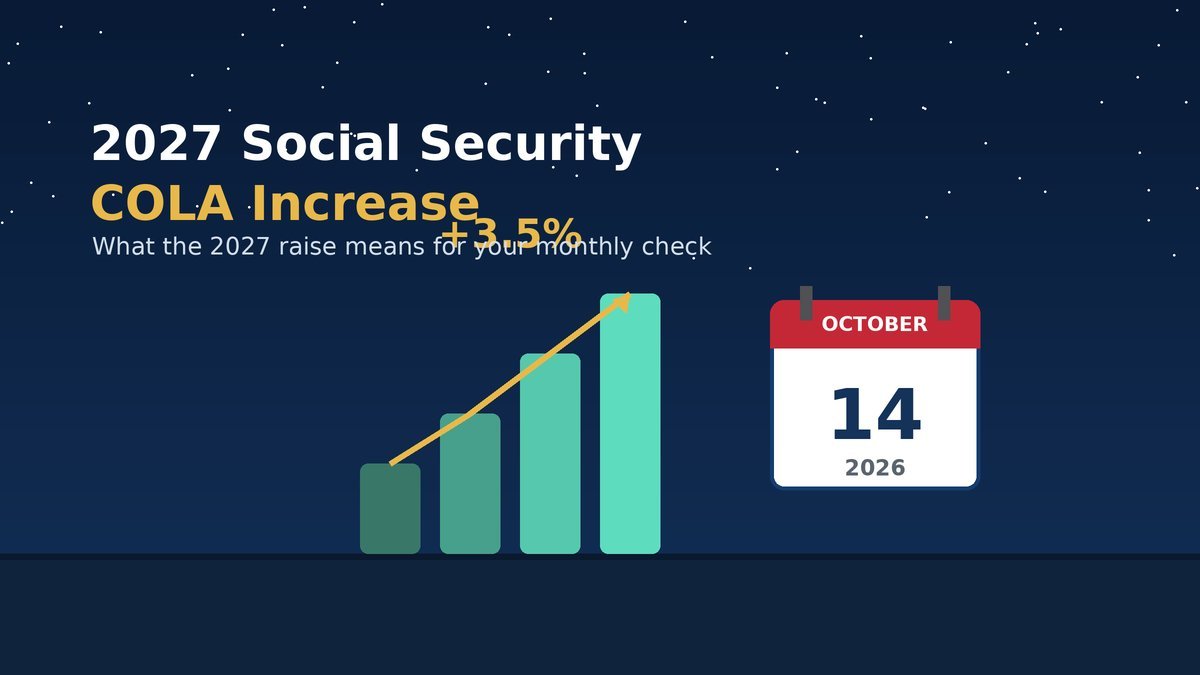
The 2027 Social Security Cost-of-Living Adjustment (COLA) will be officially announced on October 14, 2026. Independent forecasters currently estimate it at 3.5–3.6%, which would raise the average retiree’s monthly benefit by roughly $70–$75 — the largest increase since 2023. The final number depends on August and September inflation data and isn’t confirmed until the official announcement.
Every fall, millions of Social Security beneficiaries wait for one number: the Cost-of-Living Adjustment, or COLA. It determines how much bigger your monthly check will be the following January. For 2027, that number is expected on October 14, 2026, right after the Social Security Administration reviews September’s inflation data — and early estimates suggest it could be the largest increase in four years.
When Will the 2027 COLA Be Announced?
The Social Security Administration is scheduled to announce the official 2027 COLA on October 14, 2026, shortly after the Bureau of Labor Statistics releases the September Consumer Price Index report. The adjustment takes effect with payments made in January 2027.
The COLA is based on the average change in the Consumer Price Index for Urban Wage Earners and Clerical Workers (CPI-W) across the third quarter of the year — July, August, and September — compared to the same period the year before. As the Social Security Administration explains on its official COLA information page, the purpose of the adjustment is to make sure the purchasing power of Social Security and SSI benefits isn’t eroded by inflation, and the CPI-W is the legally mandated measure used to calculate it.
What Are the Current Estimates?
As of early September 2026, independent forecasts put the 2027 COLA somewhere between 3.5% and 3.6%, though estimates have shifted slightly as new inflation data comes in:
- The Senior Citizens League currently projects 3.6%, down from an earlier 3.8% estimate.
- AARP projects 3.5%, also revised down slightly from its earlier forecast.
- Some earlier estimates from the spring were as high as 3.9%.
If the final number lands at 3.5 — 3.6%, it would be the biggest COLA since 2023, when benefits jumped 8.7% amid pandemic-era inflation. For comparison, recent years have seen smaller increases: 3.2% in 2024, 2.5% in 2025, and 2.8% in 2026. (These are third-party estimates, not SSA-confirmed figures, and may change before the October 14 announcement.)
How Much More Money Will You Actually See?
The average retired worker currently receives a bit over $2,000 a month in Social Security benefits. A 3.5–3.6% COLA would translate to roughly:
- $70–$75 more per month for the average retired worker
- ~$68 more per month for the average surviving spouse
- ~$57 more per month for the average disabled worker on SSDI
It’s a meaningful bump, but for many retirees it won’t fully offset a year of rising costs — especially once increases to Medicare Part B premiums, which are also announced in the fall, are factored in. Historically, a portion of the COLA increase is absorbed by higher Medicare premiums before it ever reaches a beneficiary’s bank account.
Other Changes Coming With the 2027 Announcement
The COLA isn’t the only number the SSA updates each October. Alongside it, expect announcements on:
- The maximum taxable earnings cap — the ceiling on income subject to Social Security tax, is expected to rise from $184,500 in 2026 to around $190,200 in 2027.
- The retirement earnings test limits — the income thresholds for beneficiaries who claim before full retirement age but continue working, expected to rise modestly as well.
- The value of a Social Security work credit — the amount of earnings needed to accumulate the 40 credits required for retirement eligibility.
- The 2027 maximum monthly benefit — the highest possible payout for someone retiring at full retirement age.
Why the COLA Estimate Keeps Changing
You may notice forecasts shifting slightly from month to month — that’s normal. The COLA is calculated using inflation data from a specific three-month window (Q3), so until all three months of data are in, any estimate is just that: an estimate. Cooler-than-expected inflation in recent months has already nudged projections down from as high as 3.9% earlier in the year to the current 3.5–3.6% range. If inflation ticks up again in the final data, the COLA could land higher than current forecasts suggest.
What Should You Do Now?
While you wait for the official announcement, it’s worth using the time to:
- Estimate your own benefit — a general COLA percentage doesn’t tell you your specific dollar increase, since it’s applied to your individual benefit amount, not the national average.
- Review your retirement income plan — if a COLA increase still won’t keep pace with your actual expenses, it may be worth revisiting your withdrawal strategy from other retirement accounts.
- Watch for the Medicare Part B announcement — it typically comes out around the same time and directly affects how much of your COLA you actually keep.
Want to see how a COLA increase — or any change in your work history and retirement age — would affect your specific Social Security estimate? Try our free Social Security / Pension Calculator to run the numbers for your own situation.
Frequently Asked Questions
When will the 2027 Social Security COLA be announced?
The official announcement is scheduled for October 14, 2026, right after the September Consumer Price Index (CPI-W) data is released.
How much will Social Security increase in 2027?
Current independent estimates range from 3.5% to 3.6%, though the exact figure won’t be confirmed until the SSA’s official announcement.
Will the 2027 COLA cover my rising costs?
Not necessarily. A 3.5–3.6% increase is based on past inflation, and part of it is often absorbed by higher Medicare Part B premiums, which are announced around the same time.
Why do COLA estimates change before the official announcement?
The COLA is calculated from Q3 inflation data (July, August, September). Estimates shift as each month’s data becomes available, and only firm up once all three months are in.
What was the Social Security COLA in previous years?
Recent COLAs were 2.8% in 2026, 2.5% in 2025, 3.2% in 2024, and 8.7% in 2023 — the largest increase in over four decades due to pandemic-era inflation.
Does the COLA apply automatically to my benefit?
Yes. The COLA is applied automatically to your existing benefit amount — you don’t need to apply or request it. The increase shows up starting with your January 2027 payment.

Waqar Khan is the founder of PensionCalculator.online, a platform dedicated to helping individuals understand pension systems through free online calculators and easy-to-read educational content. His mission is to simplify retirement planning so that anyone can estimate their pension benefits, understand pension rules, and make more informed financial decisions.